
Why Hospitals Choose Wired Nurse Call & Intercom Systems
What is the difference between a basic nurse call system and a two-way nurse intercom? This guide explains the main technologies, equipment options, benefits, and important buying considerations for hospitals planning a new communication system or upgrading an existing ward. Learn why hospitals use wired nurse call and intercom systems. Compare basic calling, two-wire voice intercom, and digital systems to choose the right solution.
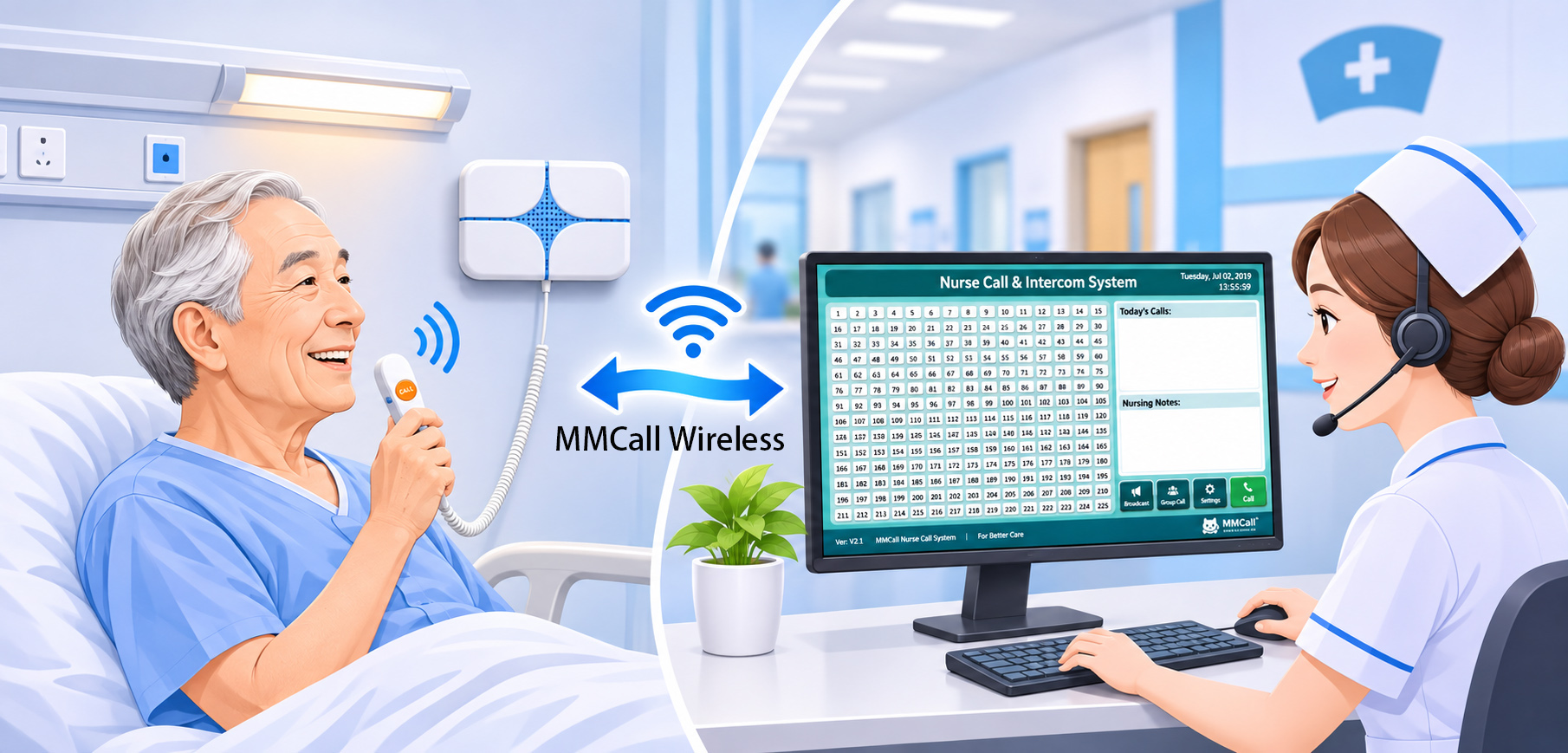
Benefits, System Types & How to Choose the Right Solution
Better Patient Communication Starts with the Right System
When a patient needs help, pressing a bedside call button is often the quickest way to contact nursing staff.
But receiving a call is only the beginning.
A basic nurse call system tells nurses which room or bed needs assistance. A nurse intercom system goes one step further by allowing patients and nurses to speak directly.
This simple difference can make everyday communication easier in hospital wards.
However, hospitals have several types of systems to choose from, including basic wired calling, two-wire voice intercom, and fully digital or IP-based solutions.
In this guide, we explain why hospitals use nurse intercom systems, what benefits they provide, and how to choose a suitable system for different healthcare environments.
1. Why Do Hospitals Need Nurse Intercom Systems?
Understand Patient Requests Before Entering the Room
Patients call nurses for many different reasons.
Some need help getting out of bed. Others may have questions about their care or need assistance with everyday activities.
With a basic nurse call system, staff receive a notification such as:
Room 203 — Bed 2 — Nurse Call
The nurse knows where the call came from but does not know what the patient needs.
With a two-way intercom, the nurse can answer and ask:
"Hello, how can I help you?"
The patient can explain the request.
For example:
"I need help getting out of bed."
The nurse can then arrange the appropriate assistance.
Support Communication Between Nurses and Patients
Two-way voice communication allows nursing staff to speak with patients without immediately entering the room for every request.
This can be helpful when staff need to clarify a question, provide a simple instruction, or arrange for another team member to attend.
Voice communication does not replace bedside care. It provides an additional way to communicate before staff arrive.
Improve Nursing Team Coordination
A nursing station may be responsible for many patient rooms.
A centralized intercom system helps staff identify incoming calls, answer requests, and communicate with selected rooms.
Support Different Types of Calls
Some patients require routine assistance, while others may need urgent help.
Compatible nurse call systems can use separate call buttons and notification types to distinguish different requests.
Provide More Information for Management
With suitable management software, hospitals can also record calling events and review selected call handling information.
A Basic Nurse Call System Sends a Request. A Nurse Intercom Also Allows a Conversation.
2. Three Types of Wired Nurse Call Systems
Option A — Basic Wired Nurse Call System
Button Calling Without Voice Communication
This is a straightforward system.
When a patient presses a bedside button, the nursing station receives a notification showing the calling room or bed.
Compatible systems may also use corridor displays and room indicator lights.
Main Functions
- Bedside patient calling
- Nursing station notification
- Room or bed identification
- Bathroom emergency calling options
- Visual call indicators
Best For:
Facilities that only need patient calling and staff notification, where such a system meets applicable requirements.
The main limitation is that patients cannot speak directly with nurses through the basic calling equipment.
Option B — Two-Wire Nurse Call & Intercom System
Wired Calling with Two-Way Voice
A two-wire nurse intercom connects bedside terminals with the nursing station through a dedicated communication cable.
In MMCall's two-wire system design, power, data, and voice communication share a two-core connection.
This can simplify wiring compared with some traditional multi-wire systems.
Main Functions
- Patient bedside calling
- Two-way voice communication
- Nurse-to-patient calling
- Compatible corridor displays
- Bathroom emergency calling
- Optional wireless staff notifications
- Optional management software
Best For:
Hospitals that need reliable bedside voice communication and can install a dedicated wired network.
Option C — Digital or IP-Based Nurse Intercom System
Network-Based Communication & Management
A digital or IP-based system uses suitable network infrastructure to connect communication terminals and management equipment.
Depending on the product, these systems may provide advanced software functions and integration options.
They can also require more detailed network planning and ongoing IT support.
Best For:
Hospitals with suitable IT infrastructure or projects requiring specific digital communication functions.
3. Why Consider a Two-Wire System?
A Practical Balance Between Communication and Installation
MMCall's healthcare communication approach combines a dedicated two-wire bedside intercom network with digital nurse station management.
The wired connection supports bedside calling and voice communication.
Compatible receiving equipment and management software can provide additional functions.
Simpler Communication Wiring
A supported two-wire system uses a common two-core connection for its bedside power, data, and voice signals.
This may reduce the amount of dedicated communication wiring compared with certain older system designs.
Centralized Nurse Station Communication
The nursing station can receive calls, identify beds, and communicate with patients through compatible intercom terminals.
Optional Digital Management
With suitable software, hospitals can display ward information and record supported call events.
Optional Wireless Extensions
Compatible wireless buttons, staff watch pagers, and other notification devices can be added to selected system configurations.
This can be useful when temporary beds or mobile nursing staff need additional calling or receiving options.
Wired Voice Communication with Flexible Management Options.
4. What Equipment Does a Typical System Need?
A wired nurse intercom system generally includes several main devices.
Bedside Intercom Terminals
Patients use bedside terminals to call nurses and communicate through voice.
Depending on the model, the terminal may include call, cancel, or care assistance buttons.
Handheld Patient Call Units
A handheld device allows a patient to request help while lying in bed.
Nurse Station Controller
The central controller manages communication between the bedside terminals and nursing station.
Nurse Station Display
A display or computer interface shows incoming calls, room numbers, bed numbers, and supported call status information.
Corridor LED Displays
Corridor displays provide call information in selected ward areas.
Some compatible models also support voice announcements.
Bathroom Emergency Buttons
Emergency buttons or pull-cord devices provide an additional way to request assistance.
Room Door Indicator Lights
Compatible indicator lights help staff identify rooms with active calls or other configured events.
Optional Management Software
Software can record call events and provide selected management reports.
Not every hospital needs every option. The final system should match the facility's communication requirements.
5. Which System Should Your Hospital Choose?
Choose Basic Wired Calling If:
The main requirement is to send patient assistance requests to nursing staff, and two-way voice is not needed.
Choose Two-Wire Nurse Intercom If:
Patients and nurses need to speak directly, and the hospital can install dedicated bedside communication cables.
Choose a Digital or IP System If:
The project requires a particular digital network architecture or advanced integration functions.
Consider a Hybrid Wired & Wireless System If:
Regular patient beds need wired intercoms, but the hospital also requires mobile staff notifications or additional wireless calling points.
Before selecting a system, consider the number of beds, building layout, required features, installation budget, future expansion, and local regulations.
6. Frequently Asked Questions
What is the difference between nurse calling and nurse intercom?
A nurse call system sends assistance requests. A nurse intercom also allows two-way voice communication between compatible terminals.
Can nurses call patients directly?
Yes, when the selected system supports nurse-to-patient voice communication.
Does a two-wire intercom require internet access?
Not necessarily for its local bedside communication functions. Network services may be required for additional software or integration features.
Can a wired system include wireless nurse watches?
Some systems can connect to compatible wireless receivers and staff watch pagers through suitable controllers.
Is a wired nurse intercom suitable for existing hospitals?
Yes, but installation depends on available cable routes, building conditions, and the amount of construction work required.
Is a two-wire intercom always cheaper than a fully digital system?
Not always. Total cost depends on equipment, installation, software, maintenance, and project requirements.
7. Conclusion: Start with the Communication You Need
A hospital nurse call system should be selected around the way patients and nursing staff communicate.
If basic calling is enough, a simpler system may be suitable.
If nurses need to understand patient requests before entering the room, a two-way intercom provides additional communication options.
MMCall offers wired nurse call and intercom solutions with compatible displays, wireless extensions, and management functions.
Need Help Choosing a Hospital Nurse Intercom?
Tell MMCall about your hospital size, number of beds, and communication needs.


